


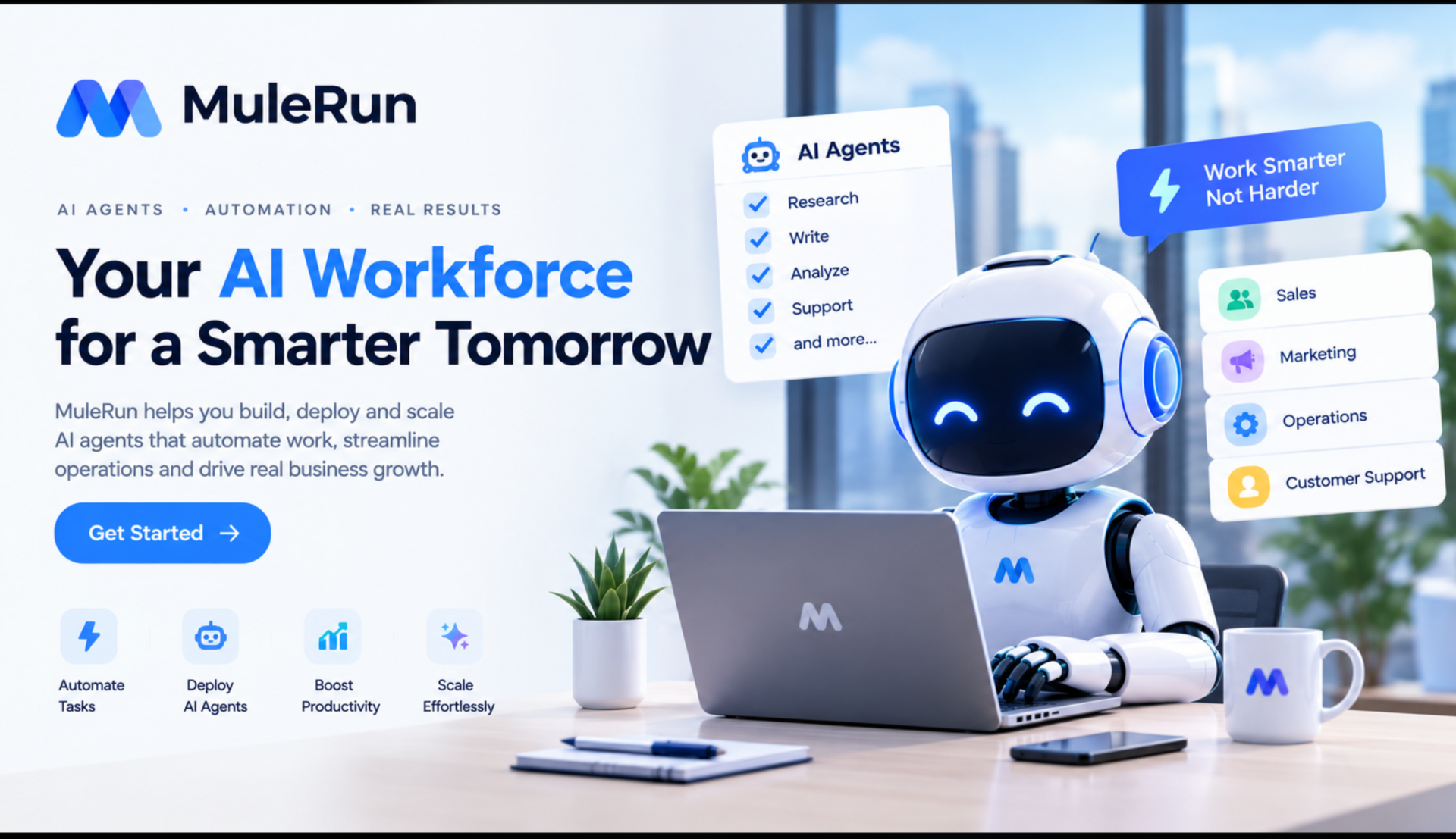
Discover Modern Digital Productivity With MuleRun And Intelligent Automation
Digital technology has transformed the way people work, communicate, and manage everyday responsibilities. Businesses and individuals now handle multiple activities through online platforms, digital documents, communication tools, and cloud-based applications. Although these technologies make work more accessible, managing numerous responsibilities can still become complicated. Repetitive tasks, information overload, and time-consuming processes often prevent people from focusing on their most important goals.
Artificial intelligence is introducing new opportunities to simplify these challenges. AI-powered systems can assist with research, content creation, information organization, and various other digital activities. Instead of completing every task manually, users can explore intelligent solutions that help organize their work and improve productivity.
MuleRun is part of this growing AI-powered productivity environment. Its focus on AI agents provides an approach to managing digital responsibilities through intelligent task assistance. Users can explore ways to delegate suitable activities, organize workflows, and reduce repetitive manual work.
The concept of AI agents goes beyond traditional automation. While basic automation generally follows predefined instructions, intelligent agents can assist with tasks that involve multiple steps and different types of information. Depending on their available capabilities and permissions, they may help users research topics, prepare written material, analyze information, or coordinate digital activities.
For freelancers, entrepreneurs, marketers, and professionals, these capabilities can support more organized working routines. Rather than spending the entire day switching between small responsibilities, users can focus on planning, creativity, and important decisions.
Modern productivity is not simply about completing more tasks. It is about managing time effectively and creating processes that make everyday work easier. Intelligent automation provides an opportunity to build these processes while keeping people involved in important decisions.
rganize Everyday Responsibilities With MuleRun And Smart AI Agents
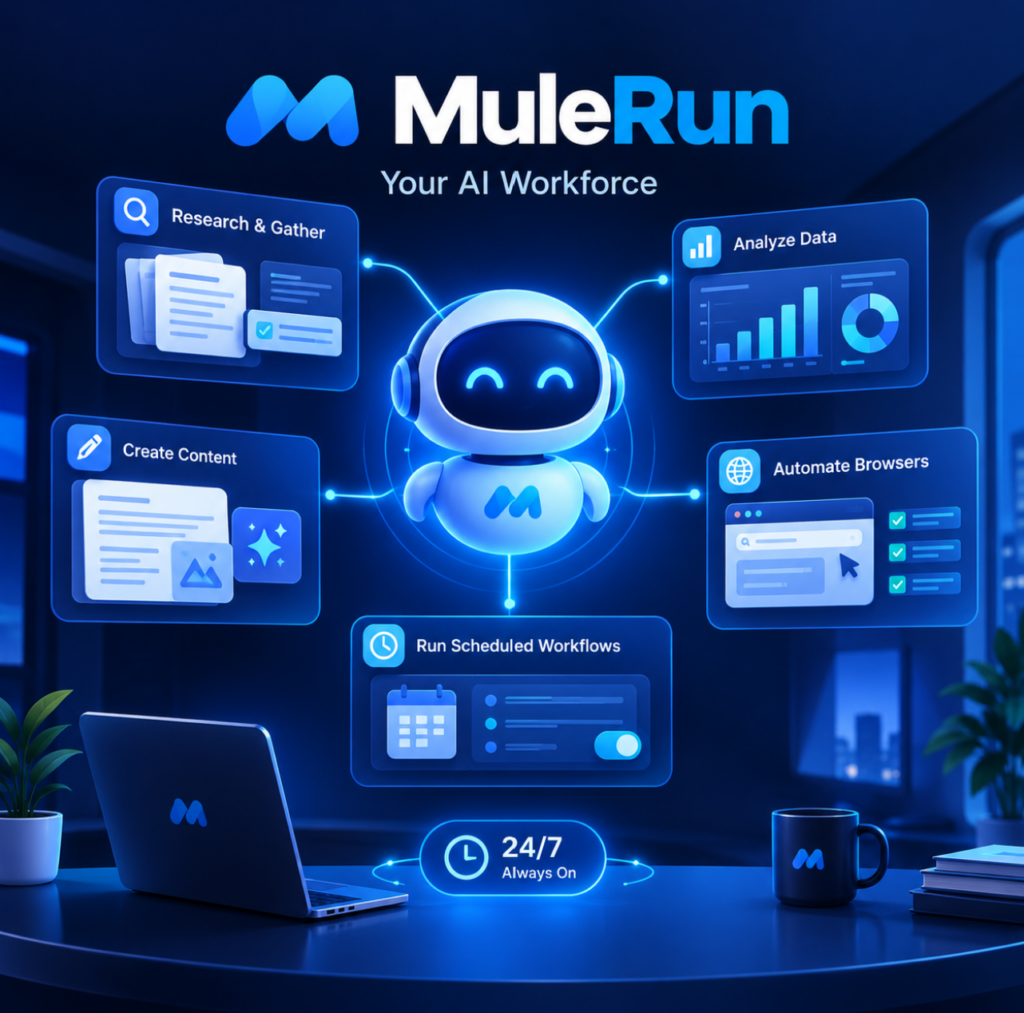
Managing everyday responsibilities requires planning, attention, and consistency. A typical working day may include responding to emails, collecting information, preparing documents, attending meetings, and completing project-related activities. When these responsibilities are handled separately, it becomes difficult to maintain a smooth workflow.
AI agents can help organize suitable activities by supporting different stages of a task. They may assist with collecting information, preparing initial drafts, arranging notes, or completing other repetitive digital responsibilities. This can reduce the amount of time users spend on routine activities.
MuleRun brings attention to this approach through its AI-agent-focused productivity environment. Users can explore intelligent assistance for different types of digital work and consider which activities are suitable for automation.
For example, a freelancer working with multiple clients may need to research topics, prepare project outlines, organize documents, and develop content regularly. Managing these responsibilities manually can consume several hours. An AI-supported process can assist with initial preparation, allowing the freelancer to spend more time reviewing work and communicating with clients.
Students can also benefit from organized digital workflows. Researching academic subjects, preparing study notes, summarizing information, and organizing assignments are activities that require time and concentration. AI agents may provide useful support during these processes, while students remain responsible for understanding and verifying their work.
Another advantage of task organization is improved consistency. When users establish clear instructions and repeatable processes, similar activities can follow a more structured approach. This makes it easier to manage responsibilities and identify areas where additional improvements are needed.
However, automation should always be used thoughtfully. Tasks involving confidential information, important decisions, or sensitive communication require appropriate human supervision. AI assistance works best when users understand its capabilities and review important outputs.
Accelerate Research Activities With MuleRun And Intelligent Information Processing
Research is an essential activity across many industries. Marketing professionals study customer interests, business owners examine market developments, students explore academic subjects, and content creators search for relevant information. These activities often require collecting information from different sources and arranging it into a useful format.
Traditional research can become time-consuming when users need to repeat similar steps for multiple projects. They may need to search for information, compare different findings, organize notes, and prepare summaries. AI-powered assistance can make parts of this process more manageable.
MuleRun provides an environment centered on intelligent agents, which can support research-oriented workflows depending on the available tools and task requirements. Users can explore ways to delegate suitable research activities and organize information more efficiently.
Consider a digital marketing professional preparing a campaign for a new product. Before creating content, the professional may need to understand the target audience, identify relevant topics, examine competitors, and prepare a content strategy. An AI agent can assist with preliminary research and help arrange findings into a structured outline.
Similarly, a business owner preparing a presentation may need to collect information about industry developments, customer preferences, and business opportunities. AI assistance can help organize the initial research so that the owner can concentrate on interpreting the information and making decisions.
Information processing is another important part of research. Large amounts of unorganized information can be difficult to understand and use. AI systems may help convert collected material into summaries, categories, and structured notes.
Despite these advantages, research quality depends on accuracy. AI-generated information may contain incomplete details or incorrect claims. Users should verify important facts, check original sources, and review figures before including them in reports or professional documents.
Combining intelligent research assistance with human evaluation can create a more balanced process. It helps reduce repetitive effort while ensuring that important decisions are supported by reliable information.
Improve Content Creation With MuleRun And AI-Powered Writing Support
Content creation plays a major role in digital communication. Businesses publish website articles, product descriptions, newsletters, advertisements, and social media updates. Professionals also prepare presentations, reports, emails, and proposals. Producing different types of content regularly requires creativity, planning, and time.
AI-powered writing assistance can support the early stages of content development. It may help users brainstorm topics, create outlines, prepare initial drafts, rewrite sentences, and summarize information. These capabilities can make writing workflows more organized.
MuleRun’s AI-agent approach can be explored for content-related activities and other digital tasks. Depending on the available capabilities, users may use intelligent assistance to organize writing requirements, prepare draft material, and manage different stages of content production.
For example, a company planning a new digital marketing campaign may require several types of content. The team might need blog topics, email drafts, social media captions, and website descriptions. An AI-supported workflow can help generate initial ideas and arrange them according to the campaign’s objectives.
Freelance writers can also use AI assistance during research and planning. Preparing an outline before writing can make it easier to organize information and maintain a consistent structure. AI-generated suggestions may provide a starting point that writers can improve through their own knowledge and experience.
However, quality content requires more than automated text generation. It should offer useful information, communicate clearly, and reflect the intended brand personality. Human editing is essential for improving readability, checking facts, removing unnecessary repetition, and making the content relevant to its audience.
Users should also consider originality and copyright requirements when preparing content. AI-generated drafts should be reviewed carefully before publication. Adding relevant examples, personal insights, and industry knowledge can make the final material more valuable.
When used responsibly, AI writing assistance can support creativity instead of replacing it. It allows writers and marketers to spend more time developing meaningful ideas and improving their communication.
Coordinate Professional Projects With MuleRun And Connected Digital Workflows
Professional projects usually involve multiple activities that need to be completed in a particular order. A marketing campaign may require research, planning, writing, editing, and performance evaluation. A business presentation may involve collecting data, preparing charts, organizing information, and reviewing the final document.
When each activity is managed separately, users may experience delays and unnecessary repetition. Information can become scattered across different documents, and important steps may be overlooked. A structured workflow can help bring related activities together.
MuleRun focuses on AI agents that can support different digital responsibilities. Users can explore opportunities to organize multiple task stages through intelligent assistance, depending on available integrations, permissions, and workflow capabilities.
For instance, a content production project can begin with topic research. After collecting relevant information, the next stage may involve preparing an outline and creating a draft. The material can then be reviewed and edited before publication. An AI-supported workflow can assist with selected preparation stages while the user remains responsible for quality control.
Project coordination can also benefit from better information organization. Teams often need to share updates, review documents, and track responsibilities. AI assistance may help prepare summaries and organize project information, making it easier for team members to understand progress.
Freelancers managing multiple projects may find structured workflows particularly useful. Each client can have different requirements, deadlines, and communication needs. Organizing tasks into clear stages can help reduce confusion and make daily responsibilities easier to manage.
Successful project automation requires proper planning. Users should define the expected outcome, provide clear instructions, and divide complex responsibilities into smaller tasks. Important outputs should be reviewed before moving to the next stage.
A combination of organized workflows and human supervision can make project management more consistent. It also gives professionals more opportunities to concentrate on strategic decisions and creative problem-solving.
Strengthen Business Operations With MuleRun And Efficient AI Solutions
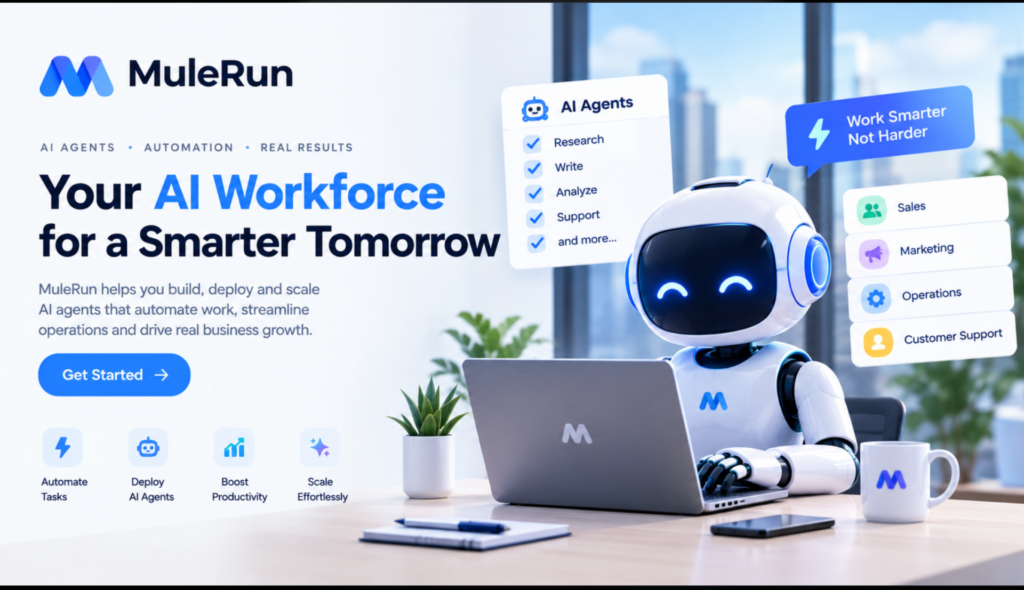
Businesses regularly manage activities such as customer communication, marketing, research, administration, and internal documentation. As organizations grow, these responsibilities become more demanding. Teams need effective systems to manage their workload while maintaining service quality.
AI-powered tools can support selected business activities by reducing repetitive manual work. They may assist with preparing documents, organizing information, generating content ideas, and supporting preliminary research. These capabilities can help employees use their time more effectively.
MuleRun can be explored as part of a modern business productivity strategy. Its AI-agent approach offers opportunities to investigate intelligent assistance for different digital workflows. Businesses can identify suitable activities and evaluate whether automation improves their existing processes.
For example, an e-commerce business may need regular product research, website content, marketing ideas, and internal reports. An AI-supported workflow can help prepare initial information and draft materials. Employees can then review the output and make the necessary adjustments before using it.
Small businesses may also benefit from this approach. Business owners often manage several responsibilities without a large team. They may handle administration, marketing, customer communication, and planning themselves. Automating appropriate digital activities can help reduce routine work and create more time for business development.
Marketing agencies can also explore AI assistance for campaign preparation. Researching topics, organizing content calendars, and preparing draft captions are activities that can benefit from structured workflows. Human professionals can focus on brand strategy, audience understanding, and creative direction.
Businesses should carefully consider privacy and security before introducing AI agents into their operations. Access to confidential documents, customer details, and internal systems should be managed through appropriate permissions. Important business decisions and external communications should receive human review.
Responsible automation can support business efficiency without removing the importance of professional judgment. It provides an additional way to organize work and respond to changing operational requirements.
Develop Long-Term Productivity Strategies With MuleRun And Continuous Automation
Building an efficient digital working environment requires continuous improvement. Introducing an AI tool is only one part of the process. Users also need to understand their daily responsibilities, identify suitable tasks, and evaluate whether automation provides meaningful benefits.
A useful starting point is to review everyday activities. Some tasks require creativity, personal communication, or professional judgment, while others involve repetitive information processing. The second category may offer opportunities for AI assistance.
MuleRun can be explored as a part of this process by allowing users to work with AI agents for suitable digital responsibilities. Starting with simple activities can help users understand how intelligent assistance fits into their existing routines.
Clear instructions are important for achieving useful results. Users should explain the task, provide relevant context, describe the expected output, and mention any specific requirements. Detailed instructions can help reduce misunderstandings and improve the quality of generated material.
It is equally important to review the results. Users should check whether the completed task meets their expectations, contains accurate information, and follows the required format. If the output is incomplete, instructions can be adjusted and the workflow can be improved.
Productivity strategies should also include regular evaluation. A process that works well for one activity may not be suitable for another. Users can compare the time required for manual and AI-supported tasks, examine output quality, and identify areas that need additional supervision.
As AI technology develops, intelligent agents are becoming an increasingly important part of digital work. They offer new possibilities for organizing responsibilities, supporting research, preparing content, and coordinating professional activities.
The most effective approach combines automation with human creativity and responsibility. People remain essential for setting priorities, understanding business needs, checking information, and making final decisions. By using intelligent assistance thoughtfully, individuals and organizations can develop more flexible working habits.
MuleRun represents this evolving interest in AI-powered productivity and digital workflow management. Exploring intelligent agents for suitable activities can help users create organized processes, manage everyday responsibilities, and make better use of their available time.